You got through the acne.
The breakouts are less frequent now. Maybe gone entirely. But the skin they left behind is a different story. Pits in the cheeks. Texture that catches the light badly. A landscape your foundation cannot quite smooth over.
The frustration is real and specific: you have tried the vitamin C, the niacinamide, the retinol. You may even have tried a chemical peel. The surface improves slightly. The structural damage does not move. And that is because acne scars are not a surface problem. They are a structural problem, and treating them requires going to the structural level.
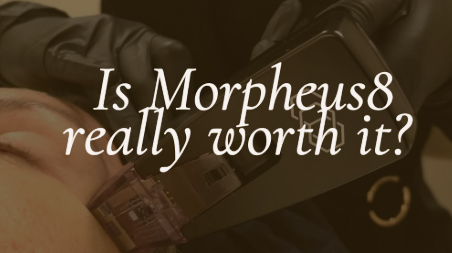
This is what Morpheus8 for acne scars in Nairobi does.
Table of Contents
What Causes Acne Scars and Why Do They Not Go Away on Their Own
Not all acne leaves scars. The ones that do are almost always the result of significant inflammation deep in the follicle, the kind that destroys collagen and connective tissue as it heals.
When that damage heals, the skin fills the gap with scar tissue rather than healthy collagen. Scar tissue is structurally different. It is denser, less organised, and it does not behave the way normal skin does. The result is one of several scar types:
| Scar Type | How It Looks | What Causes It |
|---|---|---|
| Ice-pick scars | Deep, narrow pits, like a puncture wound in the skin | An infected cyst or nodule that destroys tissue down to the deep dermis |
| Rolling scars | Broad, shallow depressions with sloping edges, giving skin a wavy appearance | Fibrous bands pulling skin surface downward from below |
| Boxcar scars | Wide, U-shaped pits with sharp vertical edges | Inflammatory damage destroying collagen in a defined zone |
| Hypertrophic / keloid scars | Raised, firm scar tissue, more common in melanin-rich skin | Excess collagen deposited during healing, particularly in Fitzpatrick IV-VI |
The reason topical treatments cannot resolve these issues is the penetration depth. Serums and creams remain at or near the skin’s surface. The American Academy of Dermatology confirms that atrophic scars (ice-pick, rolling, and boxcar) require treatments that stimulate new collagen production in the dermis, not just the surface, to produce meaningful improvement.
Clinical Note: Melanin-rich skin is more prone to hypertrophic and keloid scarring than lighter skin types. This is why the energy settings, needle depth, and protocol for Morpheus8 are calibrated per patient at Taneet. A one-size-fits-all approach produces unpredictable results in Fitzpatrick IV-VI skin.
How Does Morpheus8 Treat Acne Scars Differently From Other Treatments
Most surface-level treatments, chemical peels, topical retinoids, and standard microneedling work by stimulating mild cell turnover in the upper layers of the skin. They improve overall tone and texture and work well for mild Post-Inflammatory Hyperpigmentation (PIH). But they cannot reach the deeper collagen disruption that creates structural scars.
Morpheus8 works differently because it combines two mechanisms simultaneously. The Morpheus8 device uses gold-plated insulated microneedles that penetrate the dermis and subdermis at a precisely controlled depth, up to 4mm for facial acne scars, delivering radiofrequency (RF) energy directly into the scar tissue at that depth.
This does two things at once:
- Mechanical disruption: The microneedles physically break down the disorganised fibrous scar tissue and create controlled micro-injuries that trigger the skin’s healing cascade.
- Thermal remodelling: The RF energy heats the dermis to a specific therapeutic temperature, contracting existing collagen and stimulating new collagen synthesis from fibroblasts in the treatment zone.
- Deep structural rebuilding: As the treated area heals over the following weeks, new, organised collagen fills the space previously occupied by scar tissue. The pits become shallower. The texture improves. The improvement is structural, not cosmetic.
A 2025 study published in Aesthetic Surgery Journal found fractional RF microneedling technology to be “effective and very safe for treating all skin types with acne and acne scars,” with particular efficacy noted for atrophic scars across Fitzpatrick IV to VI.

What Types of Acne Scars Does Morpheus8 Work Best On
Not all scar types respond equally, and honesty here matters. Here is what the clinical evidence supports:
| Scar Type | Morpheus8 Response | What to Expect |
|---|---|---|
| Rolling scars | Excellent | Significant improvement typically visible from session 2. The fibrous bands causing rolling are disrupted; the skin surface progressively levels out. |
| Boxcar scars | Good to excellent | Walls of boxcar scars soften and shallow out. Deeper boxcar scars may require a combination approach. |
| Ice-pick scars | Moderate | Some improvement in depth, but very narrow deep scars may also benefit from additional treatments such as TCA cross. |
| Hypertrophic scars | Good for surface softening | RF energy helps break down excess collagen. Multiple sessions typically required. |
| PIH (dark spots from acne) | Good as an adjunct | Morpheus8 does not directly target pigment, but the collagen remodelling improves overall skin quality and tone. |
How Many Morpheus8 Sessions Do You Need for Acne Scars in Nairobi
A standard protocol for acne scarring is three sessions, spaced four to six weeks apart. This spacing allows the collagen remodelling triggered by each session to complete before the next treatment builds on it.
Most patients notice improved skin texture and reduced scar depth from the second session. The full result of a three-session course is assessed at three months after the final treatment, as collagen continues maturing for up to 12 weeks post-session.
Some patients with moderate-to-severe scarring benefit from a fourth session. Your clinician will assess this at your mid-course review.
Clinical Note: Results from Morpheus8 for acne scars continue improving for three to six months after treatment as new collagen matures. The improvement you see at one month post-treatment is not the final result. Patience is part of the protocol.
Is Morpheus8 Safe for Dark Skin When Treating Acne Scars
Yes, when calibrated correctly. This is one of Morpheus8’s most significant clinical advantages over older resurfacing technologies.
The insulated microneedles deliver RF energy at the tip, deep in the dermis, bypassing the melanin-rich epidermis. This means the device does not trigger the surface melanocyte activation that causes PIH in darker skin types with laser or ablative treatments. The Skin of Colour Society classifies fractional RF microneedling as appropriate for all Fitzpatrick types, specifically because of this epidermal-sparing mechanism.
At Taneet, every Morpheus8 treatment begins with Fitzpatrick typing at consultation. The needle depth, energy level, and number of passes are set specifically for your skin. This is not a generic protocol applied uniformly. The calibration is individual.
How Does Morpheus8 Compare to Other Acne Scar Treatments Available in Nairobi
| Treatment | Mechanism | Best For | Melanin-Rich Skin Safe? |
|---|---|---|---|
| Morpheus8 RF Microneedling | Deep RF energy + microneedling remodels dermis | Rolling, boxcar, moderate ice-pick scars | Yes, with correct calibration |
| Chemical Peels | Acid exfoliation of surface layers | Mild textural improvement, PIH, early scars | Yes, with a melanin-specific formulation |
| Standard Microneedling | Mechanical collagen stimulation, surface level | Mild textural scars, early scarring | Yes, low risk |
| Aerolase Neo Elite Laser | Targeted laser energy bypasses melanin | PIH, surface irregularity, some scar types | Yes, engineered for darker skin |
| Ablative CO2 Laser | Removes outer skin layers, strong remodelling | Severe scarring | High risk in melanin-rich skin |
For most Taneet patients with established acne scarring on melanin-rich skin, Morpheus8 sits at the top of the treatment hierarchy for structural improvement. It is often combined with chemical peels (to address surface PIH between sessions) and PRP therapy (to accelerate the healing response and improve overall skin quality).
Frequently asked questions
What is the best treatment for acne scars on dark skin in Nairobi?
Morpheus8 RF microneedling is widely considered the most effective non-ablative option for atrophic acne scars on Fitzpatrick IV-VI skin. Its insulated microneedles deliver RF energy below the melanin-rich epidermis, avoiding the risk of PIH that ablative treatments carry on darker skin. At Taneet, it is often combined with chemical peels and PRP for comprehensive results.
How many Morpheus8 sessions are needed for acne scars?
A standard protocol is three sessions spaced four to six weeks apart. Results continue improving for three to six months after the final session as new collagen matures. Some patients benefit from a fourth session depending on scar severity.
Does Morpheus8 hurt for acne scar treatment?
A topical anaesthetic is applied 30 to 45 minutes before treatment. Most patients describe a warm pressure sensation during the procedure. Redness and mild swelling are normal for 24 to 72 hours post-treatment and resolve on their own.
Will Morpheus8 make my acne scars disappear completely?
Morpheus8 produces significant, clinically measurable improvement in acne scarring, typically a 50 to 70 percent reduction in scar depth and visibility over a full course. Complete elimination of deep ice-pick or severe boxcar scars is rarely achievable with any single treatment. Your clinician will set realistic expectations based on your scar type and severity at consultation.
Can I have Morpheus8 if I still have active acne?
Active breakouts need to be managed or stabilised before beginning Morpheus8 for scarring. Treating scar tissue while active inflammation is ongoing is counterproductive. Your clinician will assess your acne status at consultation and may recommend managing active breakouts first, which Taneet can also address.