Hair Loss Treatment for Nairobi Women
You noticed it in the shower drain first.
Then in your brush. Then, in the way your ponytail felt thinner than it did two years ago, the same volume of hair you’ve been tying back since university, but something is different. You can see more of your scalp at the hairline. The density around your temples has changed.
You are not imagining it. And you are not alone.
Hair thinning in women is significantly underreported, partly because it progresses gradually, partly because society frames it as exclusively a male problem, and partly because the causes in women are genuinely more complex and harder to self-diagnose.
In Nairobi specifically, environmental and physiological factors compound the issue in ways that are not discussed nearly enough.
Here is what is actually happening, and what can be done about it.
Table of Contents
Why do women in Nairobi experience hair loss differently
Female hair loss is rarely a single-cause problem. Most cases involve a combination of two or more of the following factors acting together, and in Nairobi, several of these are more concentrated than they would be elsewhere.
Hormonal shifts
Oestrogen and progesterone support hair growth by extending the anagen (growth) phase of the hair cycle. When these hormones decline or fluctuate, during the perimenopause transition, postpartum, after stopping hormonal contraceptives, or during periods of significant stress, hair shifts prematurely into the telogen (shedding) phase.
The result is increased shedding, reduced density, and, in many women, a pattern of recession at the temples and diffuse thinning across the crown.
Women in their early to mid-thirties often notice this beginning, not because anything is medically wrong, but because the hormonal environment that kept hair thick in their twenties has begun to change.
Postpartum hair loss: Is it permanent?
No. Postpartum hair loss, technically called telogen effluvium, is one of the most alarming experiences of early motherhood and one of the most misunderstood.
During pregnancy, elevated oestrogen keeps far more hair in the growth phase than usual, which is why many women notice their hair becoming unusually thick during the second and third trimesters. After delivery, oestrogen drops sharply, and all of that retained hair enters the shedding phase simultaneously.
Most women experience significant hair loss between two and four months postpartum. It is temporary; the hair cycle normalises within six to twelve months. But for many women, the recovery is incomplete: the shed hair grows back finer, the hairline recedes slightly, and the overall density does not fully return to pre-pregnancy levels without intervention.
Clinical treatment in the early recovery phase, between months four and nine postpartum, produces significantly better regrowth outcomes than waiting.
Does hard water in Nairobi cause hair loss?
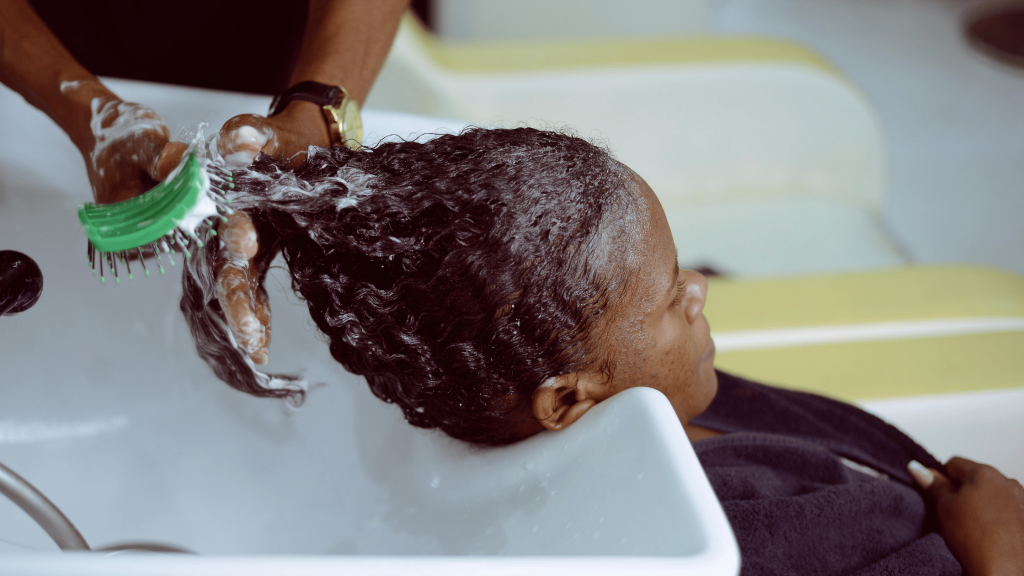
This is a question that circulates widely and for good reason: Nairobi’s municipal water supply is hard, high in calcium and magnesium. Research published in the International Journal of Dermatology has found that hard water can disrupt the scalp’s natural pH, reduce hair shaft elasticity, and, over time, weaken the follicular environment.
It is unlikely to be the sole cause of hair loss, but it is a real contributing factor that compounds other triggers, particularly in women already experiencing hormonal hair thinning.
Iron deficiency and nutrient gaps
Iron deficiency is one of the most common causes of hair thinning in Kenyan women and one of the most frequently missed. Ferritin, the stored form of iron, is required for healthy hair follicle function. Low ferritin can cause diffuse thinning across the entire scalp, even when haemoglobin levels are technically normal. This means a standard blood test showing “normal iron” levels may not capture the deficiency affecting your hair.
The World Health Organisation identifies iron deficiency anaemia as a leading public health concern in Sub-Saharan Africa. For Kenyan women, it is one of the first factors any hair loss assessment should include.
Stress and cortisol
Chronic stress, the sustained, low-grade kind produced by demanding careers, traffic, sleep deprivation, and the particular weight of modern Nairobi life, elevates cortisol, which directly suppresses hair growth and can trigger or accelerate telogen effluvium. Unlike postpartum hair loss, stress-related thinning can be ongoing if the underlying stress is not managed. Clinical treatment helps, but addressing the lifestyle driver matters too.
What actually works: clinical treatment for female hair loss
There are two primary clinical treatments for female hair loss available at Taneet, and they work through different mechanisms, which is why they are often combined.
PRP (Platelet-Rich Plasma) therapy
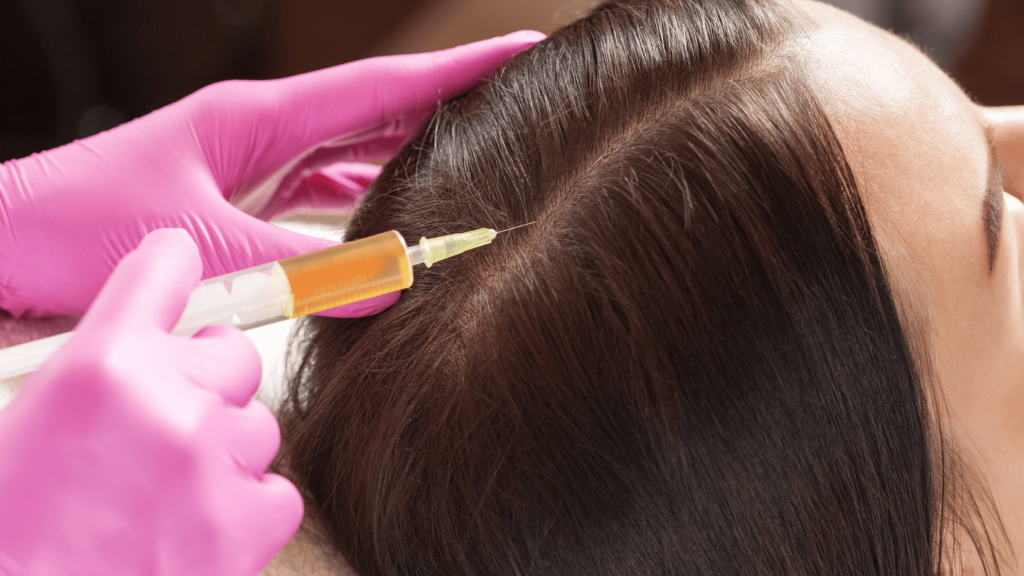
PRP uses a concentrated preparation of your own blood’s growth factors, injected directly into the scalp. The growth factors, including PDGF, TGF, and VEGF, stimulate follicular activity, increase blood supply to the scalp, and extend the anagen (growth) phase. Results are gradual and cumulative: most patients notice reduced shedding after the second session and visible density improvement after the third or fourth.
A standard protocol is three to four sessions spaced four to six weeks apart, with maintenance every four to six months.
Further reading: PRP Therapy at Taneet Nairobi: A Complete Guide
Mesotherapy for scalp and hair
Scalp mesotherapy involves micro-injections of a targeted cocktail of vitamins (particularly biotin and B-complex), amino acids, minerals, and hair growth peptides, delivered directly into the mesoderm layer of the scalp, where follicles are rooted.
Unlike PRP, which primarily works through growth factor signalling, mesotherapy delivers the specific micronutrients the follicular environment needs to function. It is particularly effective when nutrient deficiency is a contributing factor and as a complement to PRP for accelerated results.
Next in this series: Mesotherapy in Nairobi: The Skin and Hair Treatment That Quietly Outperforms the Hype
How long will it take to see results from hair loss treatment?
Hair has a slow biological cycle. Most patients notice reduced shedding within 4 to 6 weeks of starting treatment. Visible regrowth typically begins at the three-month mark. A full assessment of the results takes six months.
This timeline frustrates some patients who are accustomed to faster feedback from skincare products. The biology does not move faster than the hair cycle, but within that cycle, clinical treatment consistently outperforms no treatment. Untreated hormonal or stress-related hair thinning tends to progress. Treated hair loss tends to stabilise and, in many cases, reverse.
The American Academy of Dermatology’s guide to hair loss in women confirms that early intervention produces measurably better outcomes than delayed treatment, regardless of cause.
Frequently asked questions
Is postpartum hair loss permanent?
No. Postpartum hair loss is a temporary phenomenon driven by the hormonal drop that occurs after childbirth. The hair cycle normalises within six to twelve months. However, full density recovery, particularly at the hairline, is more complete with clinical intervention than without. The optimal treatment window is four to nine months postpartum.
What is the difference between PRP and mesotherapy for hair loss?
PRP uses your own blood’s growth factors to stimulate follicular activity and is most effective for androgenetic and stress-related hair loss. Mesotherapy delivers a targeted nutrient cocktail directly to the scalp and is particularly effective where nutritional deficiency is a factor. They work through different mechanisms and are often combined for the best results.
Can I do hair treatment while breastfeeding?
PRP is generally considered safe during breastfeeding as it uses your own blood components. Some mesotherapy formulations require assessment. Your clinician will advise based on your specific protocol.
Does Nairobi water actually cause hair loss?
Hard water can disrupt scalp pH and weaken hair shaft integrity, contributing to breakage and follicular stress, but it is unlikely to be the sole cause of significant hair loss. It is a compounding factor, not a root cause on its own.
Which vitamin deficiency most commonly causes hair thinning in Kenyan women?
Low ferritin (stored iron) is the most common nutritional driver of hair thinning in Kenyan women, followed by vitamin D deficiency and B-complex deficiencies. Standard blood panels often miss low ferritin; your clinician may recommend a more comprehensive panel before beginning treatment.