Chemical peel dark skin Nairobi
When done correctly, it clears pigmentation, refines texture, and calms active acne.
A chemical peel done at the wrong depth, with the wrong formulation, on melanin-rich skin can cause the exact problem it was meant to solve.
The margin between those two outcomes is narrower for dark skin than for light, and it deserves more attention than most clinics give it.
This is the safety picture Taneet works from every time a peel is planned for Fitzpatrick IV to VI skin, the classification that covers most Kenyan skin tones, and it applies just as much to peels aimed at dark spots as to those aimed at texture or acne.
Table of Contents
Why Are Chemical Peels Riskier for Melanin-Rich Skin
The mechanism comes down to melanocyte behaviour.
Skin with more melanin has more active pigment-producing cells, and those cells respond to inflammation, including the controlled inflammation a peel intentionally creates, by producing more pigment rather than less.
Get the depth or the acid concentration wrong, and the result is not smoother, more even skin. It is a new patch of post-inflammatory hyperpigmentation, sometimes darker and more stubborn than what the peel was meant to treat.
A published review of noninvasive cosmetic treatments for Fitzpatrick IV to VI skin puts this plainly: superficial peels are generally safe and produce strong patient satisfaction in this population; medium-depth peels require real caution; and deep peels should be avoided in dark skin altogether.
What Is the Difference Between Superficial, Medium, and Deep Peels
| Peel Depth | Typical Acids Used | Safety for Fitzpatrick IV to VI |
|---|---|---|
| Superficial | Mild glycolic, lactic, mandelic, and salicylic at lower strengths | Generally safe, well-tolerated, and high patient satisfaction reported in melanin-rich skin |
| Medium | Higher strength TCA, some combination formulas | Requires caution. Depth and formulation must be calibrated specifically to your Fitzpatrick type |
| Deep | Phenol-based formulas | Should be avoided in dark skin. The risk of significant, sometimes permanent pigment change is too high |
A peel that a clinic performs confidently on lighter skin is not automatically safe to perform the same way on darker skin. The formulation and depth have to be recalibrated for melanin content, not simply applied at a lower duration.
Clinical Note
What Formulations Are Safest for Fitzpatrick IV to VI Skin
Mandelic acid, a gentler alpha hydroxy acid with a larger molecular structure, penetrates more slowly and evenly than glycolic acid, making it a favoured starting point for melanin-rich skin. Salicylic acid, being oil-soluble, is particularly effective for acne-prone dark skin without the irritation risks associated with some alternatives. Lactic acid sits between the two, hydrating as it exfoliates.
Formulations built specifically for darker skin, sometimes marketed under names like Perfect Derma Peel or similar melanin-aware systems, combine gentler acids with pigment-blocking ingredients such as kojic acid or tranexamic acid, addressing the exfoliation and the pigmentation risk in the same session rather than treating them as separate problems.
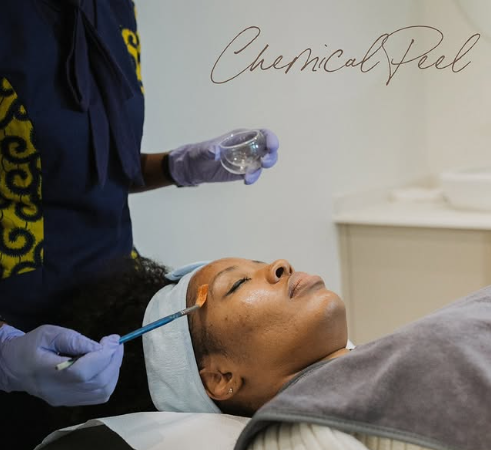
What Does Taneet Do Differently Before and After a Peel
- Fitzpatrick typing at consultation, before any peel is planned, not assumed from a visual guess
- A conservative starting depth, with strength increased gradually across a series, rather than aiming for maximum effect on the first visit
- Strict pre and post-peel sun protection, since UV exposure in the two to four weeks around a peel is one of the strongest predictors of post-inflammatory pigmentation
- A recovery protocol specific to darker skin, including when it is safe to reintroduce actives and when a top-up session should follow
None of this is exotic. It is simply treating melanin-rich skin as a distinct category with its own protocol, rather than as a darker version of the same peel used for everyone.
Is It Ever Too Risky to Get a Chemical Peel on Dark Skin
For most patients, no, provided the depth and formulation are matched correctly to the Fitzpatrick type. Deep phenol peels are the clear exception. Beyond that, the honest answer depends less on skin tone alone and more on whether the clinic performing the peel has real experience calibrating for melanin-rich skin specifically, rather than defaulting to a single standard protocol for every client who walks in.
Frequently asked questions
Are chemical peels safe for dark skin in Nairobi?
Yes, when the depth and acid formulation are correctly matched to your Fitzpatrick skin type. Superficial peels are generally safe and effective for melanin-rich skin. Deep, phenol-based peels should be avoided entirely.
What is the biggest risk of a chemical peel on dark skin?
Post-inflammatory hyperpigmentation occurs when the peel triggers increased pigment production rather than decreased it. This is more likely with the wrong depth, the wrong acid, or inadequate post-peel sun protection.
Which acids are safest for melanin-rich skin?
Mandelic acid, salicylic acid, and lactic acid are generally considered gentler and better suited to darker skin than higher-strength glycolic acid or TCA, though the right choice depends on your specific concern and skin condition.
How does Taneet reduce the risk of hyperpigmentation from peels?
Through Fitzpatrick typing at consultation, conservative starting depths that build gradually across a series, strict SPF protocols before and after treatment, and formulations chosen specifically for melanin-rich skin rather than a one-size-fits-all approach.
Can chemical peels actually treat existing dark spots?
Yes, graduated peels are among the most effective non-invasive treatments for post-inflammatory hyperpigmentation and melasma, provided the peel series is planned and monitored by a clinician experienced in melanin-rich skin.
Ready for a peel calibrated to your actual skin type?